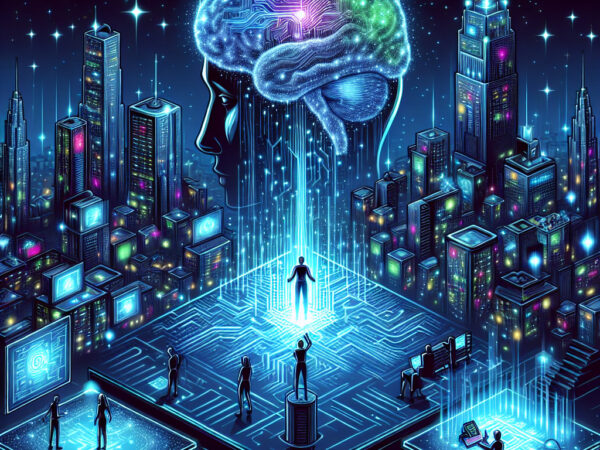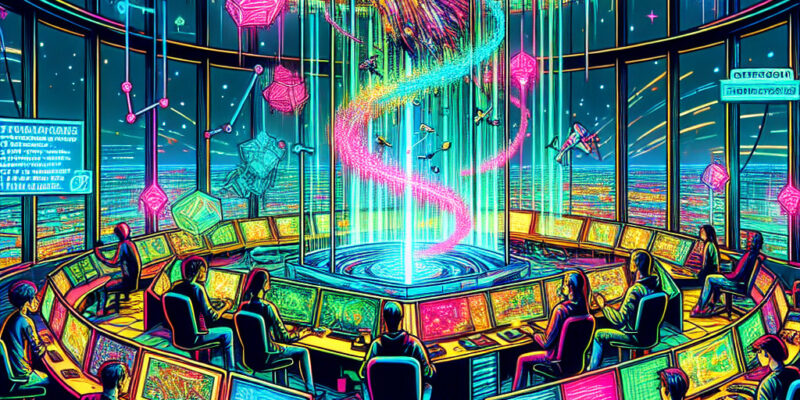
In recent years, the gaming industry has seen a significant transformation, with technology acting as a cornerstone for innovation. At the heart of this evolution is the integration of artificial intelligence, a tool that is steadily weaving itself into the fabric of game development. Google’s recent study has illuminated the growing reliance on AI agents among game developers, highlighting a trend that is reshaping the way games are created, delivered, and experienced.
Imagine a world where a game can adapt to your skill level, ensuring that the challenges are neither too difficult nor too easy—AI makes this possible. This adaptability is just one way that machine learning is enhancing gaming experiences. Developers now have the power to fine-tune game difficulty in real time, making the journey more personalized for each player. This approach not only enriches the player experience but also increases player retention.
Beyond player interaction, AI is playing a pivotal role in reducing costs and speeding up production. In the traditional gaming development cycle, creating assets and environments involved painstaking manual labor, often taking hundreds of hours. However, with AI-driven tools, developers can generate high-quality assets in a fraction of the time. This efficiency translates to lower production costs and allows for faster iteration in the development cycle. Teams can test and refine ideas quickly, enabling them to bring fresh content to players more rapidly.
Efficiency aside, the creative potential unleashed by AI is equally impressive. Developers are harnessing AI to conjure up novel game scenarios that were once limited to the imagination. By simulating complex algorithms, AI can create expansive, dynamic worlds that react and change based on player actions. This dynamism adds depth to gameplay and offers players a more immersive experience.
However, this technological embrace is not without its challenges. As with any new tool, the integration of AI into game design presents a learning curve. Developers must acquire new skills and adapt to the evolving technological landscape. Furthermore, there is an ongoing conversation around the ethical implications of AI in gaming, from data privacy concerns to the risk of creating overly addictive gaming experiences.
Despite these challenges, the potential for AI to revolutionize game design is vast. Google’s study underscores a critical point: the symbiosis between human creativity and machine precision is paving the way for a new era in gaming. Developers who embrace this technology are not only enhancing their craft but are also setting new standards for what is possible in interactive entertainment.
As gamers, we are on the cusp of a transformation that promises deeper engagement and richer storytelling. For developers, the journey of integrating AI into game creation is just beginning, with endless possibilities to explore. With every innovation, the boundary between reality and the virtual blurs a little more, crafting experiences that are as limitless as our imaginations.