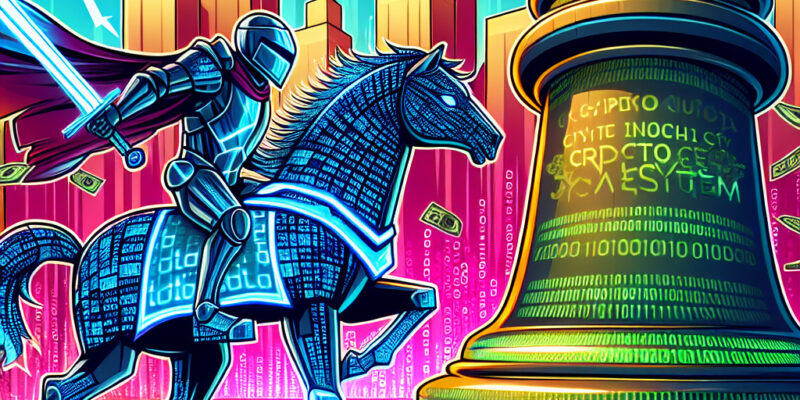
Over the past few years, the intersection of cryptocurrencies and traditional financial systems has been a fascinating, albeit tumultuous, arena. Bridging these two worlds has often been met with a series of challenges, especially for companies aiming to establish themselves as legitimate players in the financial ecosystem. One such company, Custodia, has recently faced another hurdle in its journey to integrate more closely with the U.S. banking system.
Custodia, set up with the ambition to offer a hybrid between digital and traditional finance, has been in pursuit of a master account with the Federal Reserve. This account, if granted, would mark a significant step forward by allowing the firm a direct line to the central banking system, thus enabling crucial services such as settling transactions directly with other banks and federal entities. However, securing this prestigious account has proven to be no simple task.
In the latest development, Custodia encountered another legal setback in its ongoing struggle to gain approval. A court ruling has further delayed their aspirations, creating yet another obstacle in a series of regulatory mazes they must navigate. The intricacies of these legal battles highlight a deeper issue at play—the cautious approach U.S. regulators often take when dealing with the burgeoning cryptocurrency sector.
The reluctance of traditional financial regulators to embrace digital finance can be traced back to various concerns. Stability, security, and the potential for illicit activities are frequently cited reasons for the hesitation to fully integrate cryptocurrencies into the mainstream financial system. Additionally, the rapid pace at which crypto technologies evolve presents a challenge for legislative bodies that must adapt quickly to both protect consumers and uphold existing financial regulations.
Custodia’s predicament isn’t an isolated case. Numerous crypto and fintech companies seeking legitimacy through integration with the traditional banking system face similar hurdles. Kraken, for example, has ventured into obtaining similar permissions, illustrating a broader trend of digital finance entities striving to solidify their positions by aligning with the broader financial infrastructure.
Despite these challenges, innovations in the crypto space continue to drive forward. Many companies are developing new ways to bridge the gap between digital and traditional finance outside of the traditional regulatory framework. Decentralized finance (DeFi) is one such innovation, offering services such as lending and borrowing without intermediaries, all powered by blockchain technology.
As Custodia continues its quest, the outcome of their legal efforts could set significant precedents. Success might encourage more companies to push for similar integrations, potentially leading to a re-evaluation of how crypto ventures interact with traditional banking. Conversely, continued pushback might compel companies to explore alternative paths to legitimacy and functionality.
Reflecting on the broader implications, Custodia’s story is emblematic of the transitional phase in which the financial world finds itself today. Traditional and digital finance are on a collision course that may redefine how money moves globally. This ongoing dialogue between disruption and regulation is not just a test for companies like Custodia but for the whole financial ecosystem navigating uncharted waters.
As interested parties continue to follow the twists and turns of Custodia’s journey, there lies a broader question: How will this clash between innovation and regulation shape the future of finance? Perhaps time will tell, as the legal and regulatory landscapes evolve alongside technological advances, forging a new path for the financial innovators of tomorrow.