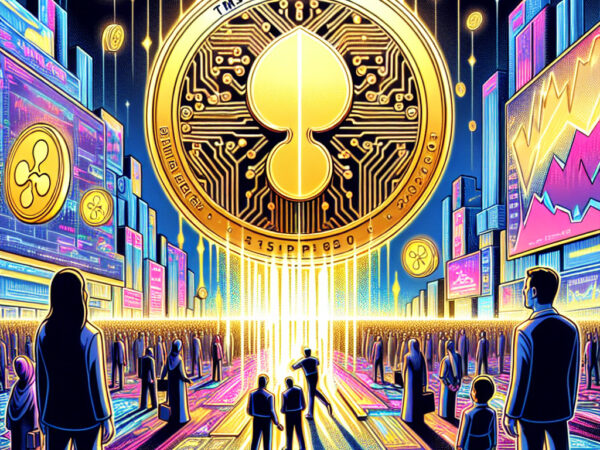
In the vast and ever-evolving world of cryptocurrencies, XRP has carved out a notable place for itself due to its versatile applications and potential to reshape various financial mechanisms. While its market value often draws the most attention, XRP’s true worth is illuminated through its impactful functionalities that reach far beyond just numbers on a screen.
One of the core strengths of XRP lies in its ability to revolutionize the speed and cost of cross-border transactions. Traditional banking systems can sometimes take days to process international payments, often incurring high fees along the way. In contrast, XRP boasts the capability to facilitate these transactions in mere seconds and at a fraction of the cost. For those who rely on global remittances, this can mean more accessible financial support for families and communities around the world.
Moreover, XRP plays a significant role in the realm of loyalty rewards programs. Businesses are increasingly looking towards cryptocurrencies to innovate their customer retention strategies, and XRP offers a compelling option. By integrating digital currencies into loyalty platforms, companies can provide more flexible and engaging rewards, enhancing customer satisfaction and loyalty while tapping into the growing interest in digital assets.
The institutional finance sector also reaps benefits from XRP’s utility. Financial institutions are constantly seeking ways to optimize their operations, and XRP, with its ability to streamline payment processes and reduce reliance on pre-funded nostro accounts, offers a promising solution. This efficiency not only aids in lowering operational costs but also supports banks in enhancing their service delivery.
XRP’s influence extends into decentralized finance (DeFi) as well, where it is used to offer improved liquidity solutions. With DeFi continuing to disrupt traditional finance by offering services such as lending, borrowing, and staking without intermediaries, XRP’s role as a liquidity provider helps strengthen this burgeoning ecosystem, promoting greater financial inclusivity and accessibility.
Lastly, the environmental impact of cryptocurrencies is a topic of growing concern, yet XRP manages to address this issue with its comparatively low energy consumption. Unlike Bitcoin, which relies on energy-intensive proof-of-work protocols, XRP operates on a consensus algorithm that requires significantly less energy. This environmentally friendly approach not only appeals to eco-conscious investors but also aligns with the increasing global push towards sustainable finance solutions.
As we examine these diverse forces propelling XRP beyond mere market speculation, it becomes evident that the cryptocurrency’s intrinsic value is deeply intertwined with its ability to address and enhance real-world financial processes. Whether through transforming cross-border payments, enriching customer loyalty experiences, or contributing to a more energy-efficient financial future, XRP’s potential seems poised to weave itself into the fabric of modern finance.
With all these elements at play, one can’t help but ponder what further innovations XRP might inspire as both the cryptocurrency landscape and global financial systems continue to evolve.